
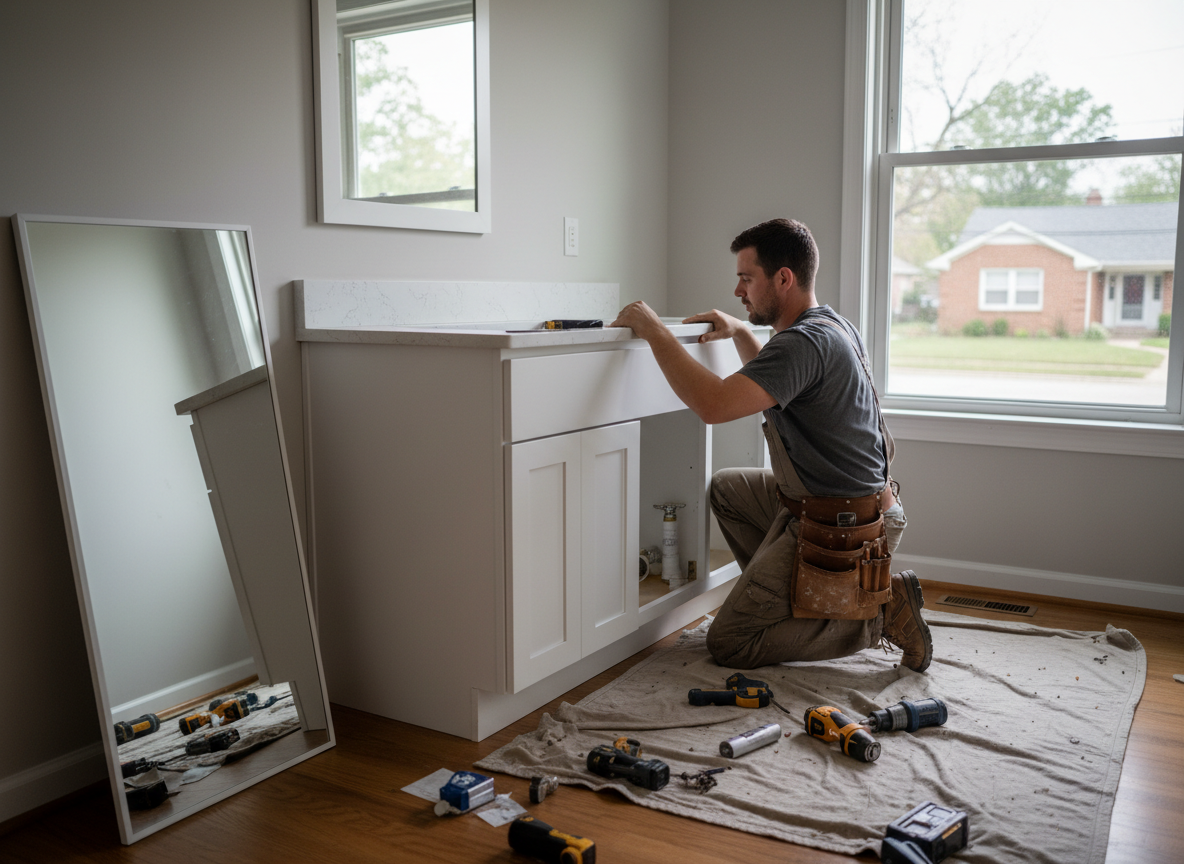
Bathroom vanity installation in Marion County often involves older housing stock from neighborhoods like Irvington and Haughville where floor joists can be uneven and original plumbing runs through tight chases. Installers must check for cast-iron drain lines common in pre-1960 homes before setting a new vanity base. Cold winters here expand and contract supply lines, so we use flexible connectors rated for temperature swings rather than rigid copper that can crack over time. In homes near the White River, soil moisture can affect basement-level vanities, requiring moisture barriers under the cabinet.
Choosing the right vanity size matters in compact Indianapolis layouts such as those in Chatham Arch or Lockerbie Square where door swings and hallway widths limit options. We measure twice for drawer clearance around existing radiators and account for the humid summers that can swell particleboard cores if the unit lacks proper sealing. Countertop materials like quartz hold up better than laminate when paired with frequent use in family homes near the Indianapolis Motor Speedway area.
Plumbing upgrades during vanity swaps frequently require relocating shut-off valves in 1920s-era homes common in Fountain Square. We pull permits when moving drain lines to meet current Marion County codes and test for proper slope to avoid slow drains during heavy summer rains. Nearby cities like Carmel and Fishers see similar jobs but with newer construction that allows faster installs compared to the tighter access in central Indianapolis blocks.
Final leveling uses shims cut to fit warped subfloors typical in Fall Creek Place properties, followed by caulking that resists mildew in the region's high humidity. Homeowners in Mass Ave lofts often request wall-mounted units to free floor space, which changes the anchoring method to hit studs behind plaster walls.
Technician insight
In Indianapolis, the thing that catches most people out with Bathroom Vanity Installation is the uneven subfloors in 1920s homes around Irvington and Haughville where joists have settled over decades. Winters here make rigid supply lines brittle, so we always switch to flexible connectors rated for the freeze-thaw cycles. Skipping a proper moisture check near the White River can lead to cabinet swelling within two seasons.
Broad Ripple vanity swap
Homeowner in a 1930s Broad Ripple bungalow needed a wider vanity but the original drain sat off-center. We found cast-iron pipe with poor slope and replaced the section with PVC while leveling the floor. New vanity installed with flexible lines and sealed against summer humidity. Drain now flows freely and drawers operate without binding.
Bathroom Vanity Installation Services We Offer
✓Custom Vanity Sizing
Measure and build vanities to fit tight spaces in older Broad Ripple and Irvington homes where standard widths won't clear doorways or radiators.
✓Plumbing Integration
Tie new vanities into existing supply and drain lines, often upgrading shut-offs in pre-war Marion County houses to prevent leaks during winter freezes.
✓Countertop and Sink Matching
Install coordinated tops and undermount sinks that handle humid summers without warping, common in Fountain Square and Haughville renovations.
✓Wall-Mount Vanity Setup
Secure floating vanities to studs in compact Lockerbie Square and Chatham Arch units, freeing floor space while maintaining code-compliant support.
✓Vanity Base Leveling
Shim and anchor bases on uneven floors found in 1920s homes near Lucas Oil Stadium, preventing rocking and drawer misalignment over time.
Bathroom Vanity Installation Cost in Indianapolis, IN
| Service | Typical Range | What Affects It |
|---|---|---|
| Basic vanity install | $650–$1,100 | Standard stock unit with no plumbing moves |
| Custom size vanity | $950–$1,800 | Built to fit older home layouts in Irvington or Haughville |
| Plumbing tie-in upgrade | $250–$450 | New shut-offs and flexible connectors for winter conditions |
| Wall-mount conversion | $400–$700 | Stud anchoring and drain reroute in compact units |
Ranges are typical for Indianapolis, IN and confirmed with an exact written quote before any work starts.
How it works
- 1
Site Assessment
Measure the space, inspect existing plumbing, and note floor conditions typical in the specific Indianapolis neighborhood.
- 2
Material Selection
Review vanity options and countertop materials suited to local humidity and temperature swings.
- 3
Plumbing Preparation
Shut off water, modify lines if needed, and install new valves for reliable operation through cold winters.
- 4
Installation And Finishing
Set and level the vanity, connect fixtures, seal edges, and test for leaks before final cleanup.
Pricing
Prices vary by vanity size, material, and whether plumbing relocation is required in older Marion County homes.